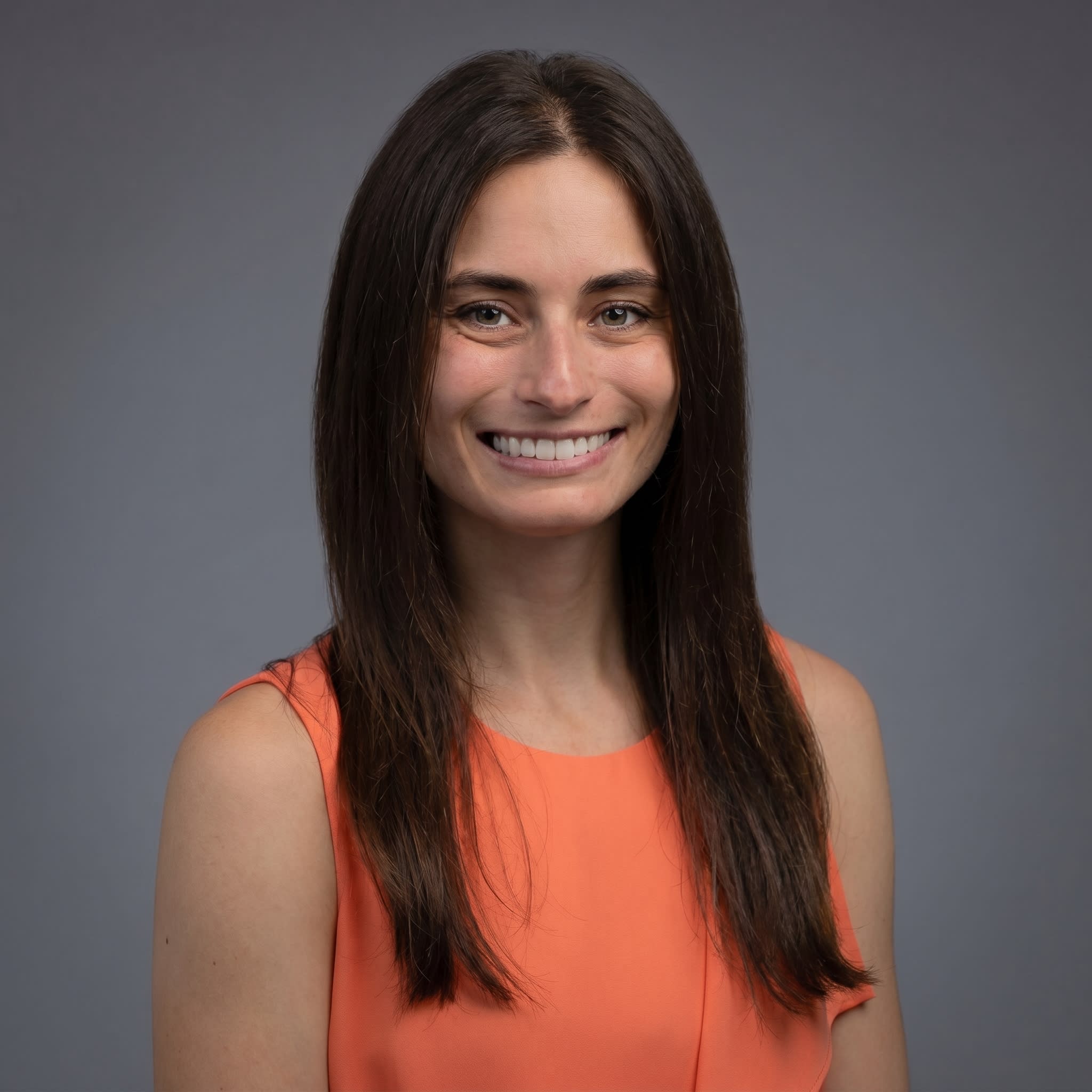
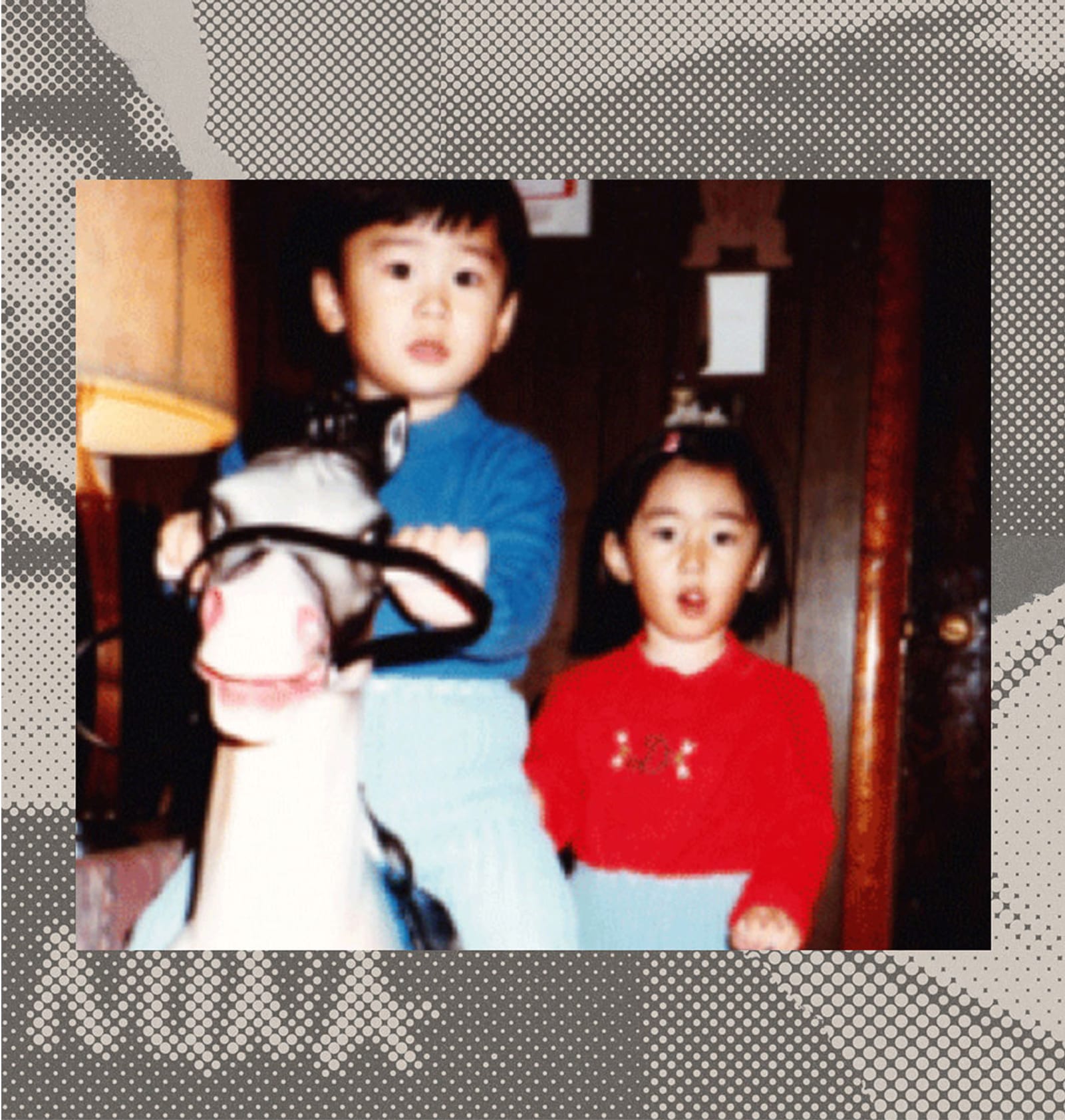
 Jini & her brother, Kimong
The Older Sister Goes First
Jini Kim built Nuna for the people technology usually leaves behind. She talks about her brother, Kimong, the meaning of a name, and why partnering with Live Healthy Chicago feels less like a new direction than a homecoming.
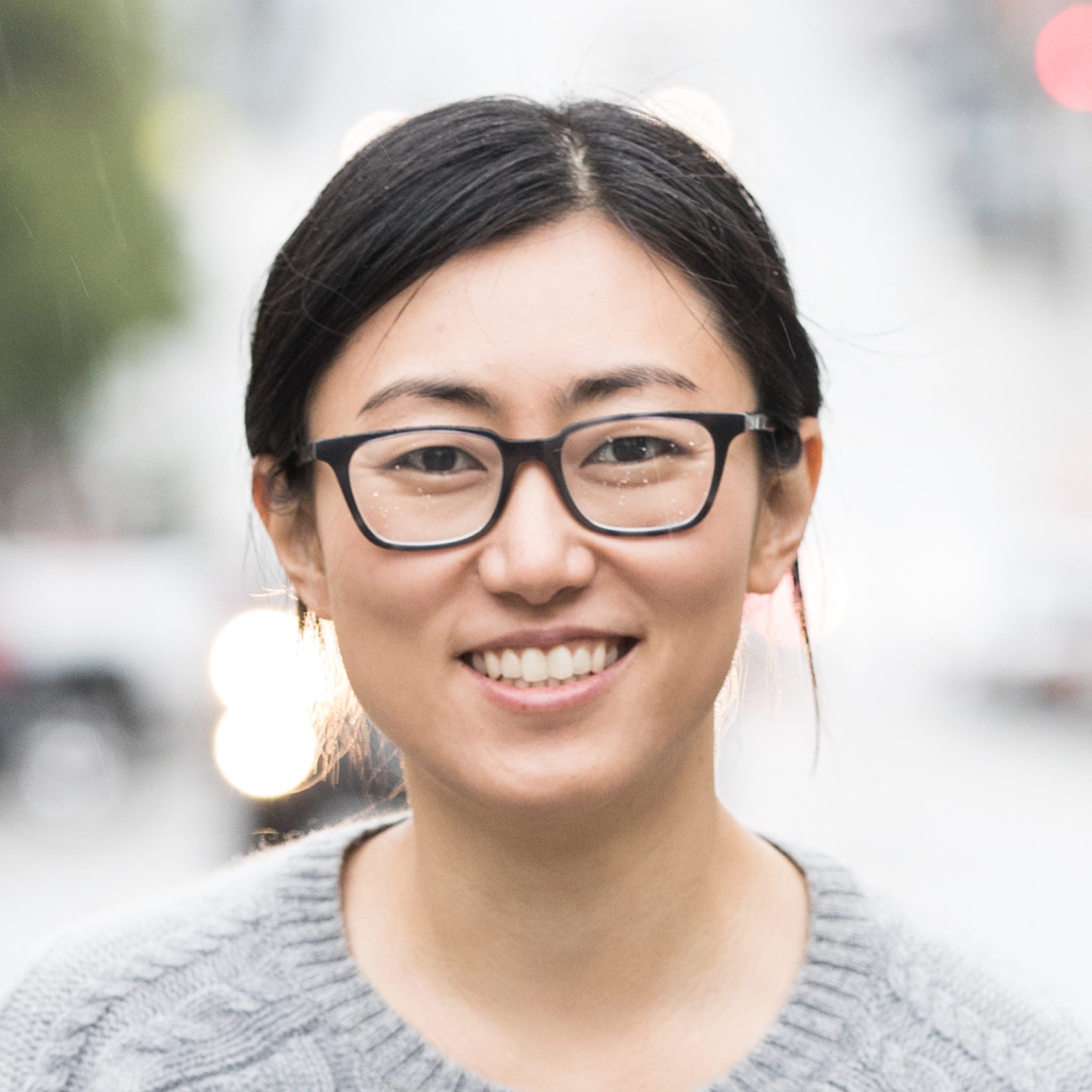
When Jini Kim was nine years old, she became her family's translator — not of language, but of a healthcare system her Korean-immigrant parents couldn't navigate and her severely autistic brother couldn't speak for. That experience didn't just shape a career. It named a company.
Most people don't know what the word Nuna means. It's the Korean word for older sister — the one who goes first, who figures things out so the younger ones don't have to, and who shows up. Jini's brother is severely autistic, epileptic, and mute. He can say only three words: umma, appa, nuna — mom, dad, sister. That last word is the name of the company Jini built.
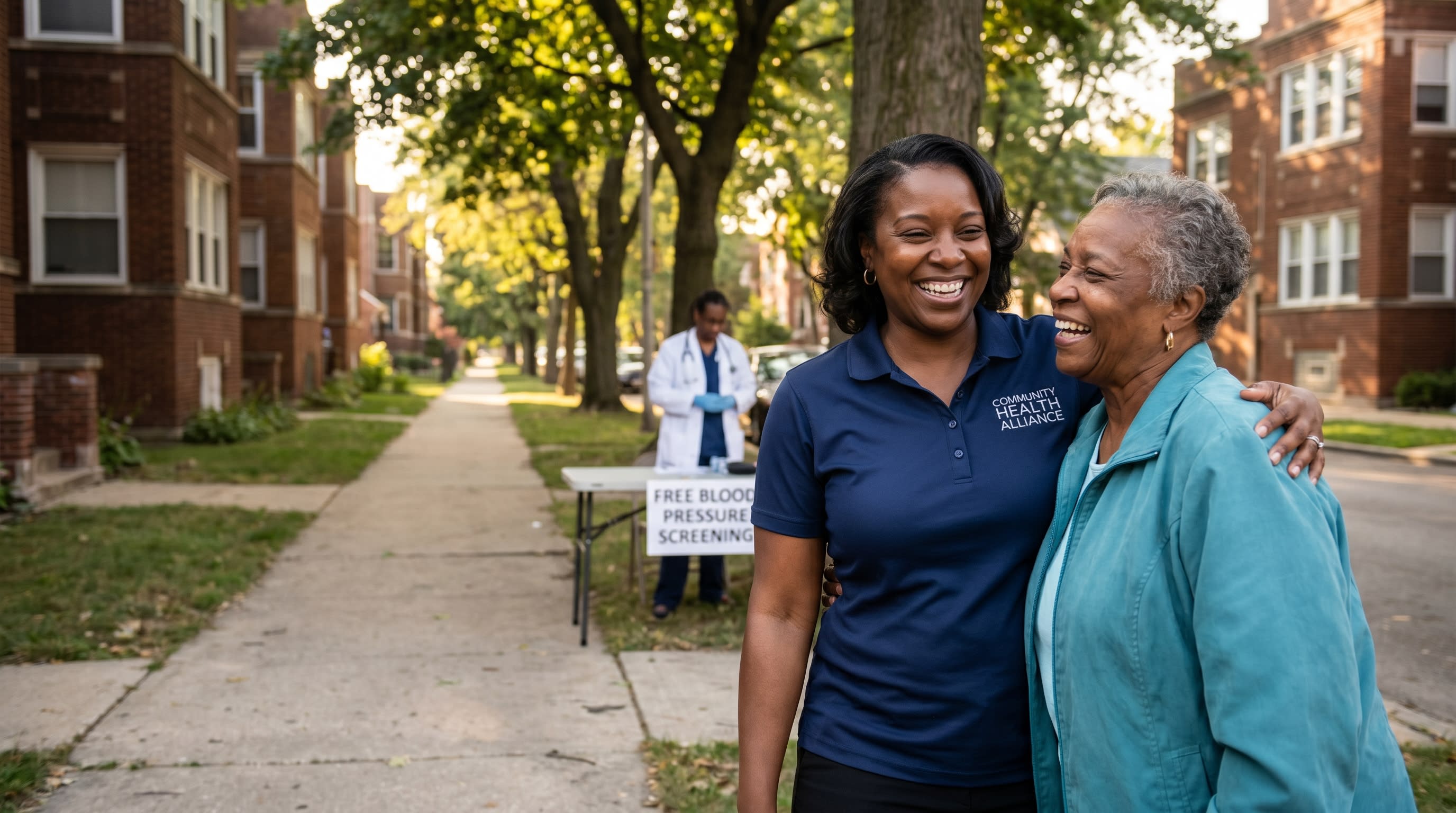
Recently, Nuna donated 2,000 app licenses to Live Healthy Chicago, putting an AI-powered health coach into the hands of patients across Chicago's South and West Sides at no cost to the clinics that serve them. We sat down with Jini to ask why. Her answer ranged from her childhood, to the limits of technology, to a single conviction: that the most powerful tools should reach the people who need them most — not just the people who already have the most.
01 The Meaning of a Name
When Jini's brother was eight and she was nine, he began developing severe grand mal epilepsy. Her parents spoke little English, so she became the one who signed him up for Medicaid and did the paperwork. She learned the language of eligibility, coverage, and denial before she was old enough to fully understand any of it.
"A child really shouldn't have to translate a healthcare system for the people she loves. But many of us did — and many of us still do.
That experience taught her two things she's carried ever since. First, that the safety net is precious — programs like Medicaid can be the difference between a family holding together and a family falling apart. And second, that we ask far too much of the people who depend on it. "We hand them a maze," she says, "and we call it access."
02 Tools That Reach the Wrong People First
Jini spent her career chasing the other half of that lesson. She worked in technology at Google and on the team that helped rescue HealthCare.gov when it was falling apart. She saw that data and good engineering can do amazing things at scale — and she saw, again and again, that the most powerful tools rarely reach the people who need them most. They tend to flow toward those who already have the most options.
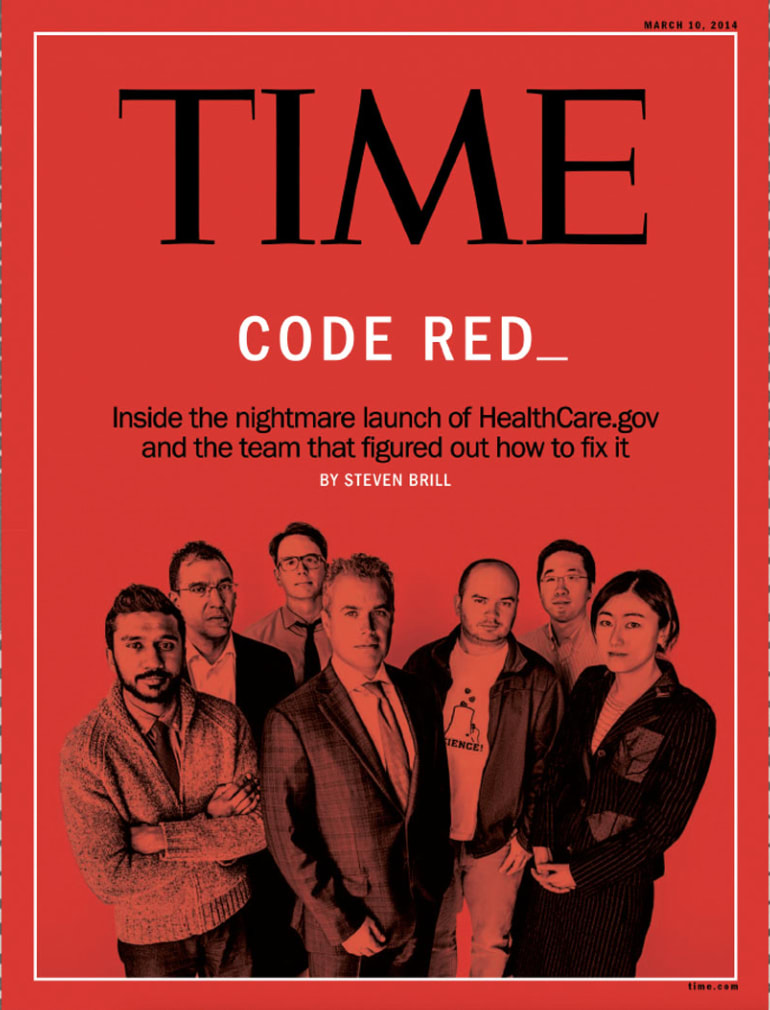
The team that rescued HealthCare.gov
When the federal health-insurance marketplace melted down in 2013, Jini was part of the small crew brought in to fix it. TIME put the team on its March 2014 cover — “Code Red” — for pulling HealthCare.gov back from the brink. Jini is pictured at far right.
"I see this with AI. I see this with so many things," she says. Nuna, she decided, would not live by that logic. The name itself is the mission statement: the older sister goes first, so the ones behind her have an easier path.
03 Why It Feels Like a Homecoming
Jini is quick to say that Nuna is arriving with humility. "Building good technology and making it work in someone's real life are two very different things," she says. "The first you can do in an office. The second you can only learn from the people living it." The one thing she most wants to learn from Live Healthy Chicago and the community is trust — which, she notes, is the one thing you literally cannot engineer.
Many of the communities Live Healthy Chicago serves have long, complicated histories with the healthcare system — reasons earned over generations to be wary. Nuna wants to understand what earns a person's confidence, and what makes a tool feel like it's on their side rather than watching over them. And it wants to learn from the clinicians, too. A tool that helps patients but exhausts the people caring for them, Jini says, isn't a success — it's just a different kind of burden.
"The goal was never for people to use an app. The goal is for somebody to feel a little more in control of their own health — and a little less alone.
04 Why Give Away 2,000 Licenses
"The hardest truth about health technology," Jini says, "is that it often widens the gap it promises to close." The newest tools arrive first for the people who already have the most — better coverage, more time, more access. By the time they reach everyone else, if they ever do, the distance has only grown.
So when Live Healthy Chicago showed up doing exactly the work Nuna believes in — meeting people in their own neighborhoods, where the burden of hypertension falls hardest, and treating the community as a partner rather than a target — donating 2,000 licenses "wasn't really a decision at all." It was a way of saying that cost should never be the reason this doesn't reach you — and of clearing a financial barrier so clinics can spend their energy on care, outreach, and the relationships that actually change lives.
05 So What Is Nuna?
Ask Jini to describe the app in plain language and the answer is simple: it's a coach. Nuna is built to help patients self-manage cardiometabolic conditions, starting with hypertension — which Jini calls "the gateway condition to every other thing that can go wrong," and which is uniquely tricky because if you don't take your medication, you often won't feel anything at all.
How Nuna works today
AI native, designed to feel human, so that people can always feel supported.
Around the clock
An AI coach that's there 24/7 — not just during a 15-minute appointment months apart.
Proactive prompts
Gentle, well-timed nudges — a reminder, a bit of education, guidance on a meal at the moment it's useful.
Gamification
Designed to be satisfying and motivating to use, so people keep coming back to their health instead of dropping off.
Kudos & support
Encouragement from friends, family, and your care team — so managing a condition feels less lonely.
See Nuna in action
A look at the coach patients carry in their pocket.
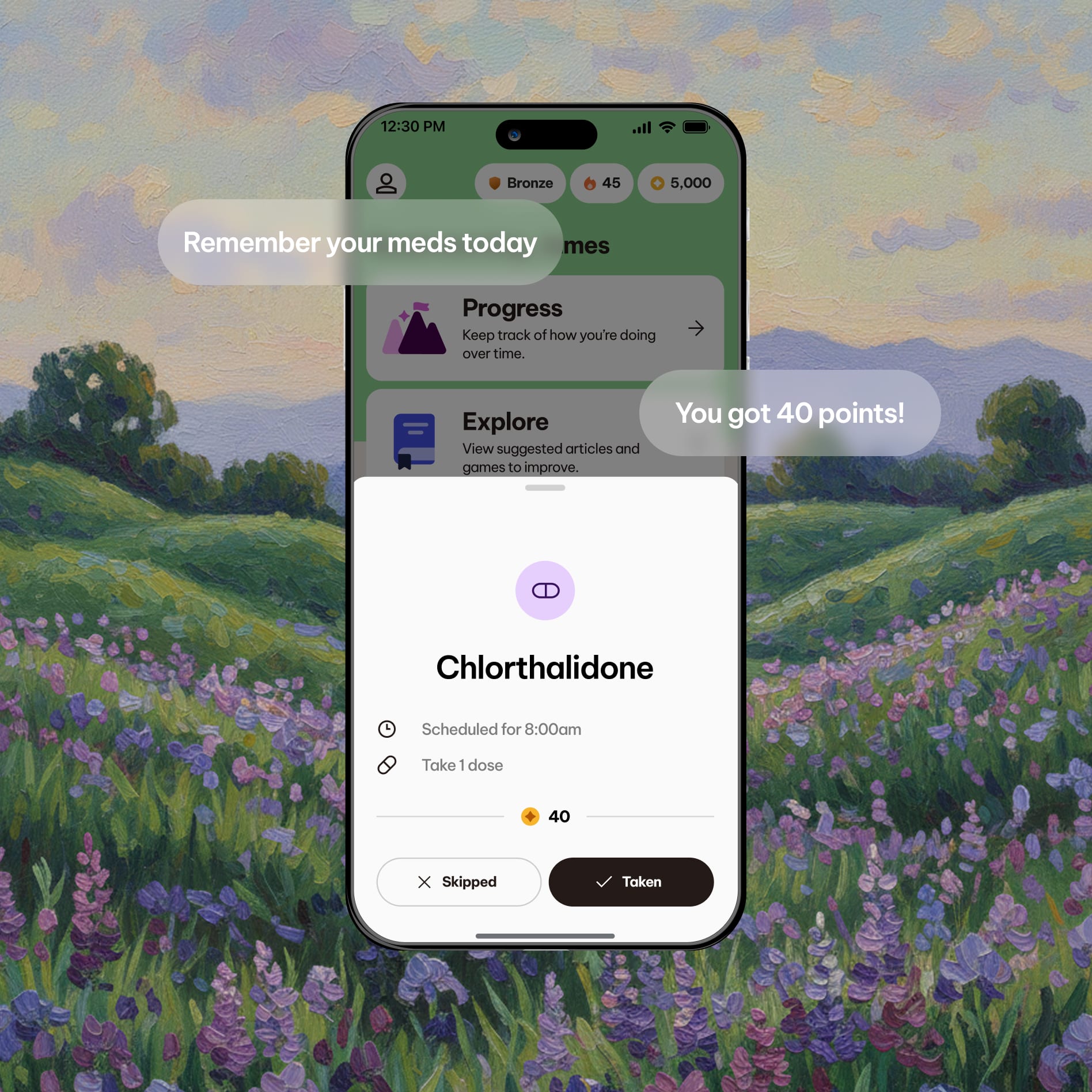
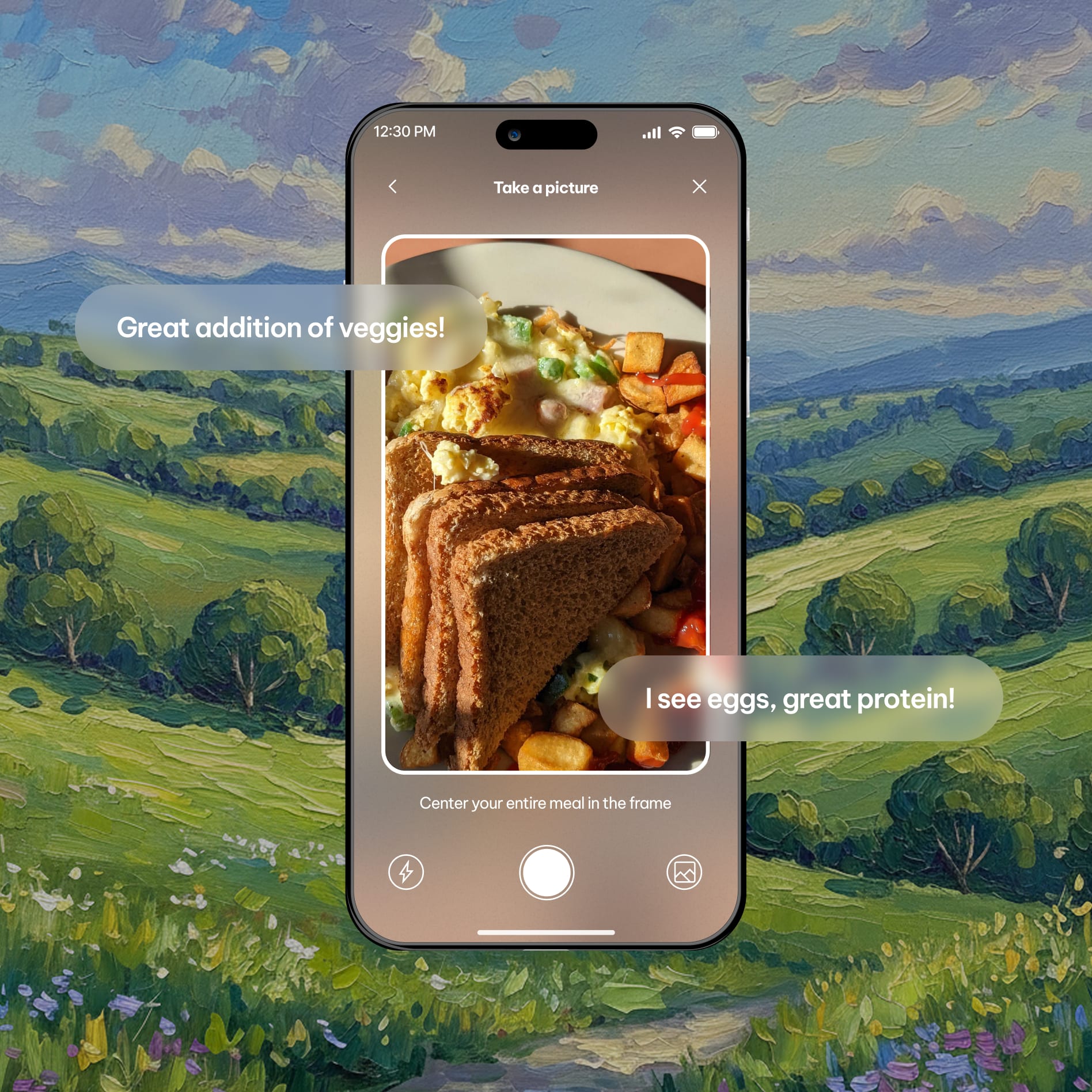
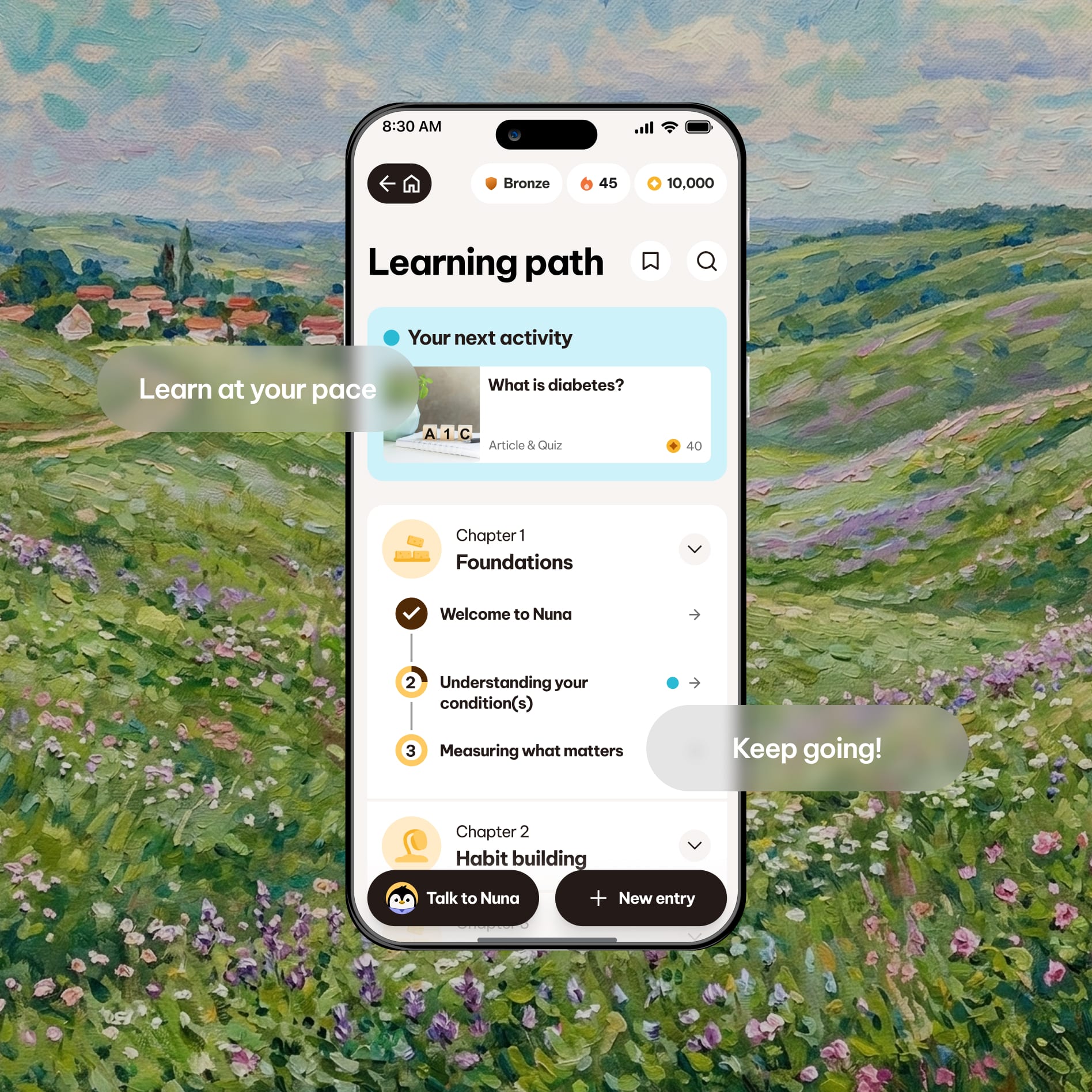
Personalized guidance and gentle nudges accompany people in the everyday moments between visits, and keep them on track with their care plans.
06 The Antidote to Being Alone
When co-host Rebecca asked Jini about that "alone" factor, she lit up. Today the app's social features connect patients to friends and family. But Jini's vision goes further: imagine an app that could connect you to people in your own neighborhood who share your condition, your age, even your background — people you could actually meet and befriend.
"Then you'll feel less alone as you go through the process of managing your hypertension," she says. And as Nuna moves toward harder conditions — cancer is one the team is already thinking about — that human connection stops being a nice-to-have. "Then it goes from being ill to life and death."
07 Real Tools, Existing Trust
Jini learned something from Live Healthy Chicago partners Dr. David Ansell and Dr. Kristen Pallok that she keeps returning to: in Chicago, the distance between a long life and a short one can be just a few miles. Neighborhoods close enough to share a skyline can differ by a decade or more in life expectancy — and hypertension and heart disease are written all over that gap.
What gives her hope is that Chicago also holds some of the most committed community leadership anywhere — people doing this work long before Nuna arrived, and long after. Her ambition isn't to stand apart from that work but to strengthen it: to put real tools into trust that already exists. If it works, she believes Chicago could become a blueprint other cities follow.
08 The Real Work Is In Between
Many people simply don't believe technology can help with chronic conditions, and Jini understands why. Hypertension rarely announces itself; a person can feel completely fine while the risk quietly builds toward strokes, dementia, and worse. We tend to manage all of it in 15-minute appointments spaced months apart — "as if something that lives in the body every single day could be understood in a handful of glimpses."
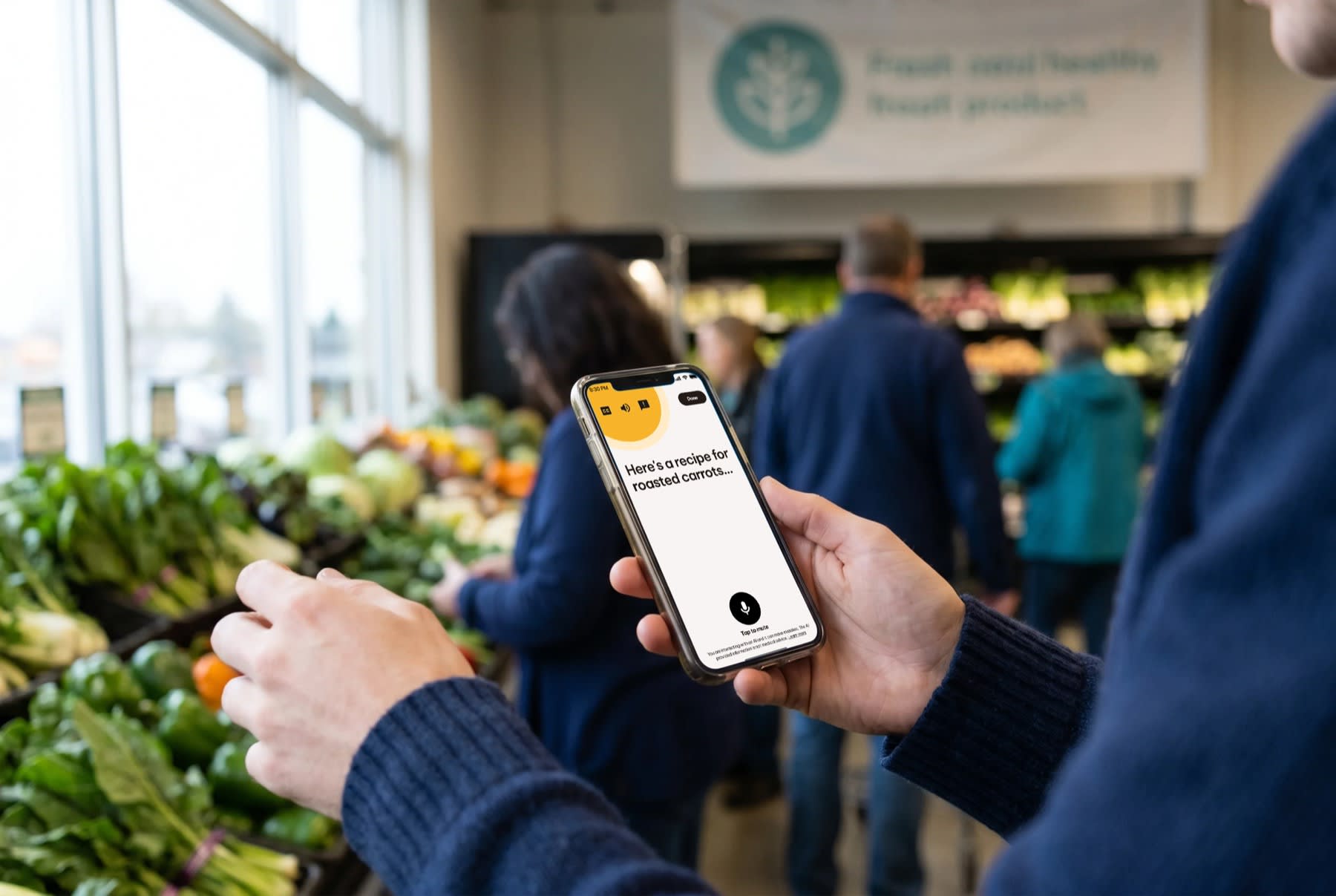
The real work, she says, is in between — and that's exactly the space technology can fill: not by replacing the doctor, but by keeping patients company. At its best, Nuna turns an abstract care plan into something a person can actually live, and quietly carries a drifting blood-pressure number back to the care team before it becomes a crisis.
But she's careful. Technology can just as easily become one more thing on an already impossible list — and people managing chronic illness are usually managing everything else too: work, family, money, transportation, exhaustion.
"The measure of a good tool isn't how much it asks of you. It's how much it lifts off your shoulders.
Explore the movement
See the partners, the 27 priority neighborhoods, and how community-rooted care and human-centered technology come together across Chicago.
Explore LiveHealthyChicago.com